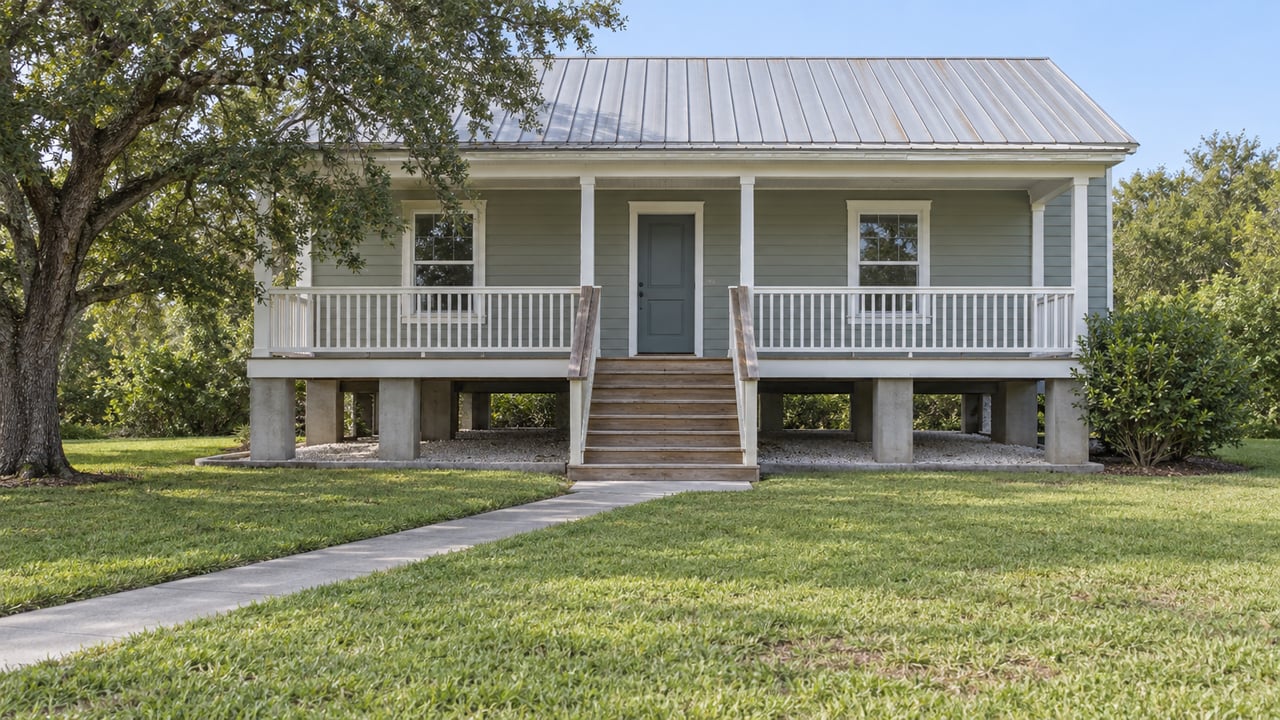
"Eligible properties must be in areas south of the 31st parallel in Baldwin and Mobile counties of Alabama."
That single line, pulled straight from the Alabama Insurance Underwriting Association's own FAQ page, defines the entire island's insurance eligibility. It reads like a footnote. On Dauphin Island, it's the sentence that decides whether a closing happens on schedule or gets held up over paperwork nobody budgeted time for.
Buyers moving from inland markets tend to treat homeowners insurance as a same-day errand near the end of the process. Call a carrier, get a declaration page, hand it to the lender, done. That assumption breaks down the moment the property sits south of that line, because every home on Dauphin Island falls inside it. Standard carriers writing policies in Mobile and Baldwin counties routinely exclude windstorm coverage from their homeowners policies altogether, which means the wind portion of the policy isn't something you shop among competing companies the way you would elsewhere. It runs through a separate market: the Alabama Insurance Underwriting Association, known statewide as the Beach Pool. Insurance industry leaders formed it voluntarily in the early 1970s, and, according to ZoomInfo, the Alabama legislature wrote it into state law in 2008 as the insurer of last resort for coastal property that private carriers won't touch for wind risk.
That's the setup. The part that actually affects a closing date is how AIUA handles a change of ownership.
The Binder Rule That Surprises Buyers at the Closing Table
Most insurance binds the moment you pay for it. AIUA's rule for real estate transfers works differently. For a closing involving a transfer of ownership, the Association issues a 30-day binder effective on the day of the request or the date of closing, whichever is later. That phrasing matters. Coverage doesn't start when the buyer applies. It starts when the sale actually closes, or later if the request comes in after that date.
To get that binder issued, the file has to include the application, property photos, a copy of the closing settlement statement, a copy of the real estate appraisal, and the full premium payment, all submitted before the 30-day window runs out.
| What AIUA requires | When it has to be ready |
|---|---|
| Application through an AIUA authorized agent | Before the binder request |
| Property photos | Submitted with the application |
| Copy of the closing settlement statement | Before the 30-day binder expires |
| Copy of the real estate appraisal | Before the 30-day binder expires |
| Premium paid in full | Before the 30-day binder expires |
Here's what that means in practice. A buyer can't lock in wind coverage weeks ahead of closing the way they might with a standard carrier, because the settlement statement and appraisal copy don't exist until the transaction is nearly finished. If the closing date moves, the binder simply follows it. The paperwork bottleneck isn't underwriting. It's whether the appraisal copy and settlement statement are sitting in a folder ready to hand over the same day funds change hands. Sellers who have those documents organized before the closing date arrives keep this step from becoming the reason a file sits open an extra week.
The Calendar Quirk That Matters More Than the Listing Price
There's a second date on the calendar that has nothing to do with the closing table, and it matters more for sellers deciding when to list.
Alabama's Strengthen Alabama Homes program, run by the Alabama Department of Insurance and funded by insurance industry licensing fees rather than tax dollars, pays up to $10,000 toward upgrading a roof to the IBHS FORTIFIED Roof standard. The next application window for Mobile County opens October 6, 2026, at 9:00 a.m. Funds are committed first come, first served, and the portal has been known to close within hours once that quarter's money is spoken for. Miss it, and the next Mobile County opening isn't until January.
The reason this is worth planning around: a University of Alabama study found that FORTIFIED-designated homes sell for nearly 7% more than homes without the certification. On top of that, coastal properties can see up to 35% off the wind portion of their insurance premium once a home carries the designation, though the exact discount depends on the carrier and wind zone. A seller who applies for the October window, gets the evaluation scheduled, and completes the roof work before listing can market a home that already carries a lower wind bill built into its selling points. A seller who waits until spring to think about it is choosing between listing without the certification or holding the property off market until the next quarterly window clears.
The designation is tied to how the roof was built, not to who owns the house. A buyer purchasing a home that already carries a FORTIFIED certificate can generally ask their own carrier to apply the same wind discount, since the underlying construction standard doesn't change with ownership.
A Realistic Timeline
For anyone under contract or getting close to it, the sequence that avoids surprises looks like this:
- Contract signed, closing date set.
- Buyer contacts an AIUA authorized agent directly for a wind quote, since this coverage isn't shopped through the open market the way standard homeowners policies are.
- Seller or their agent confirms the appraisal copy and settlement statement will both be ready to hand over on or before the closing date.
- AIUA application submitted with property photos, timed so the 30-day binder window lines up with the actual closing.
- At closing, the settlement statement and appraisal copy go to AIUA along with full premium payment, and the binder is issued that day.
- Sellers planning a FORTIFIED upgrade schedule the evaluator and submit the grant application during the quarterly window, since the roof work needs to be finished before certification, not squeezed in after a buyer is already under contract.
A Few Questions Worth Asking Early
Is flood insurance part of the AIUA wind policy? No. They're separate. If a property sits in a mapped high-risk zone, AIUA requires a flood insurance policy to already be in place before it will issue wind coverage, and that flood coverage has to match or exceed the AIUA coverage amount.
What if a standard carrier won't write a policy at all? Alabama's FAIR Plan exists as a coverage option of last resort for property that private carriers decline outright, separate from AIUA's wind-specific role. Owners in that position typically work through a licensed agent to sort out which piece of coverage comes from which source.
Does the FORTIFIED grant cover the whole cost of a new roof? It covers 100% of the mitigation cost up to $10,000. If the total project runs higher, the difference is the homeowner's responsibility, and the evaluator's fee is paid out of pocket regardless of whether the grant comes through.
None of this changes what makes Dauphin Island worth the drive out over the causeway. It just means the insurance step isn't the formality it is everywhere else, and the sellers and buyers who plan around the Beach Pool's paperwork and the grant calendar tend to close without the last-minute scramble.
If you're weighing whether to apply for the October FORTIFIED window before listing, or you want a closing timeline that actually accounts for AIUA's binder rules, the agents at Coldwell Banker Smith Homes can walk through the sequence with you, starting with a free home valuation to see where the numbers land today.
This article is general information, not legal, tax or financial advice. Consult a qualified professional about your situation.
