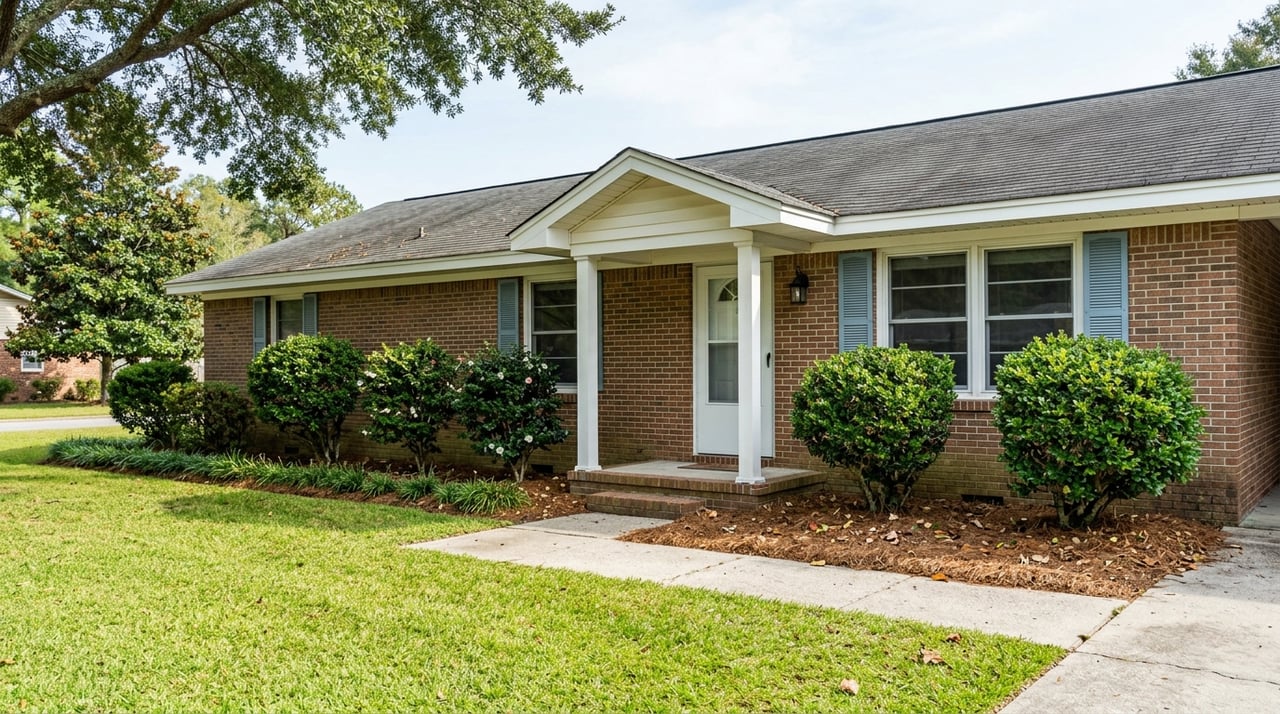
Trying to choose between a brand-new home and an older resale in Grand Bay? You are not alone. Many buyers like the idea of a fresh, move-in-ready house, but they also want the space, price flexibility, and lot sizes that resale homes can offer. If you are weighing both options, this guide will help you compare price, timing, maintenance, and lifestyle fit so you can make a confident decision. Let’s dive in.
Grand Bay Home Options
Grand Bay is mostly a detached single-family home market, which makes this comparison especially relevant if you want a house rather than a condo or apartment. According to a local housing profile from Point2Homes, 76.9% of housing units are detached single-family homes, the median construction year is 1984, and 74.1% of occupied homes are owner-occupied.
That matters because in Grand Bay, the real decision is often new construction versus established single-family homes on lots. You are usually comparing two different styles of ownership experience, not two completely different housing types.
Grand Bay Price Ranges
Home prices in Grand Bay can look a little different depending on whether you are looking at sale prices, listing prices, or average values. Public market snapshots place the area broadly in the mid-$200,000s, with sources like Redfin, Zillow, Realtor.com, and Homes.com showing different figures based on different methods.
A practical way to think about it is this: mainstream inventory often clusters from the low-$200,000s to the low-$400,000s, while homes with more acreage, larger square footage, or premium upgrades can go higher. That gives you room to compare both new and resale options without assuming there is one exact “Grand Bay price.”
New Construction Benefits
New construction in Grand Bay is currently concentrated in communities such as Windmill Palm Estates, Dees Plantation, and Ellen’s Cove. Active examples on Homes.com show prices from about $278,900 to $463,900+, with 3 to 5 bedrooms and roughly 1,650 to 3,127 square feet.
Many of these homes include features buyers want right now, such as open layouts, quartz or granite counters, LVP flooring, LED lighting, smart-home technology, brick exteriors, and 2-car garages. If you want updated finishes without planning a renovation, new construction can feel simpler and more predictable.
Another big advantage is lower near-term maintenance. Most newly built homes come with some type of builder warranty, and the FTC explains new-home warranties often cover workmanship and materials for one year, major systems such as HVAC, plumbing, and electrical for two years, and sometimes structural defects for up to 10 years.
New Construction Tradeoffs
The biggest tradeoff with new construction is often timing. Some homes are move-in ready, but others are still under construction or offered as buildable plans. Nationally, the NAHB timing data cited by Zillow shows that the average U.S. single-family home took 10.1 months to complete in 2023, while homes built for sale averaged 8.9 months.
That does not mean every Grand Bay build will take that long, but it does mean you should ask clear questions about stage of construction, estimated completion, and what happens if timelines shift. If you need to move quickly, a resale or completed new home may be a better fit.
You also want to watch upgrade costs and lot premiums. The base price may not tell the whole story. Features that seem standard in photos may actually be optional, so the true value depends on what is included in the contract and what is extra.
Resale Home Benefits
Resale homes in Grand Bay offer more variety in both price and setting. Realtor.com shows a broad range from $85,000 to $719,000, with many active listings in the roughly $204,000 to $328,000 range and lot sizes from 0.45 acre to 13.2 acres.
That wider spread can be helpful if you want flexibility. On the resale side, you are more likely to find larger lots, mature settings, and a mix of home styles and ages. Homes.com resale listings also show move-in-ready options around $230,250, $262,900, $274,900, and $289,900, along with larger homes priced above $449,000.
For many buyers, resale homes offer a better chance to stretch for land, privacy, or a different layout. If your top priority is not having the newest finishes, resale may open up more possibilities within your budget.
Resale Home Tradeoffs
The main challenge with resale homes is that condition can vary a lot. One property may be recently updated, while another may need work on the roof, plumbing, flooring, windows, or major systems. That is why inspections matter so much when you buy an existing home.
The U.S. Census Bureau reports that older homes usually require more attention over time. Owners of homes built before 1950 spent a median of $1,800 a year on upkeep, and new owners of older homes spent about $3,900 annually in the early years.
In Grand Bay, where the local median construction year is 1984, that does not mean every resale home will be costly. It does mean you should look closely at the age and condition of the roof, HVAC, water heater, plumbing, and windows before deciding what looks like the better deal.
If you are considering a home built before 1978, there is one more factor to keep in mind. The EPA advises that pre-1978 homes are more likely to contain lead-based paint, and repair or renovation work can create lead dust.
Which Option Fits You Best?
If you want a more predictable move, new construction often wins on convenience. You may get updated finishes, fewer immediate repairs, and warranty coverage, but you could also face a higher upfront price and a longer wait.
If you want more land, more variety, or a lower starting price, resale may be the stronger option. You may find better lot size, more character, or a wider range of price points, but you should be prepared for a broader range of repair and update needs.
A simple way to compare your choices is to think about what matters most:
- Choose new construction if you value: lower near-term maintenance, modern finishes, warranty coverage, and a more turnkey feel.
- Choose resale if you value: larger lots, more price flexibility, mature settings, and more home style variety.
- Compare both if you value: getting the best overall fit rather than focusing only on the newest or cheapest option.
What to Compare Beyond Price
Headline price is only part of the story. In Grand Bay, the better value often comes down to details such as lot size, finish level, repair needs, build stage, and what is included with the home.
When you compare options, focus on these questions:
- How much lot space do you actually want?
- Is the home move-in ready, under construction, or a buildable plan?
- What builder features are included, and what costs extra?
- What major systems or repairs might a resale home need soon?
- How does the total monthly cost compare once taxes, insurance, and maintenance are considered?
This kind of apples-to-apples comparison can change the decision quickly. A lower-priced resale may need updates, while a new home with upgrades and lot premiums may cost more than expected.
How to Decide in Grand Bay
The best choice usually comes down to your timeline, budget, and comfort with maintenance. If you want a home that feels fresh and easy to manage from day one, new construction may be worth the premium. If you want room to spread out or more options at different price points, resale may give you more flexibility.
In a market like Grand Bay, both paths can make sense. The key is comparing the full picture, not just the list price.
If you want help sorting through new construction and resale options in Grand Bay, Jordan Doole is here to help you compare homes, lots, and value with local insight and clear guidance.
FAQs
What is the price difference between new construction and resale homes in Grand Bay?
- New construction listings in Grand Bay currently appear around $278,900 to $463,900+, while many resale homes fall in the low-to-mid $200,000s, though both categories can go outside those ranges depending on size, condition, and acreage.
Are new construction homes in Grand Bay move-in ready?
- Some new construction homes in Grand Bay are near completion or move-in ready, while others are under construction or offered as buildable plans, so timing can vary.
Do resale homes in Grand Bay usually come with larger lots?
- Resale homes in Grand Bay are more likely to offer larger lots and a wider range of acreage options than newer subdivision homes.
Are older homes in Grand Bay more expensive to maintain?
- Older homes can require more upkeep over time, especially if key systems or features like roofs, plumbing, HVAC, windows, or flooring are aging.
What should you compare when choosing between new construction and resale in Grand Bay?
- You should compare price, lot size, timeline, included features, possible repair needs, warranty coverage, and the total cost of ownership rather than looking only at the asking price.
