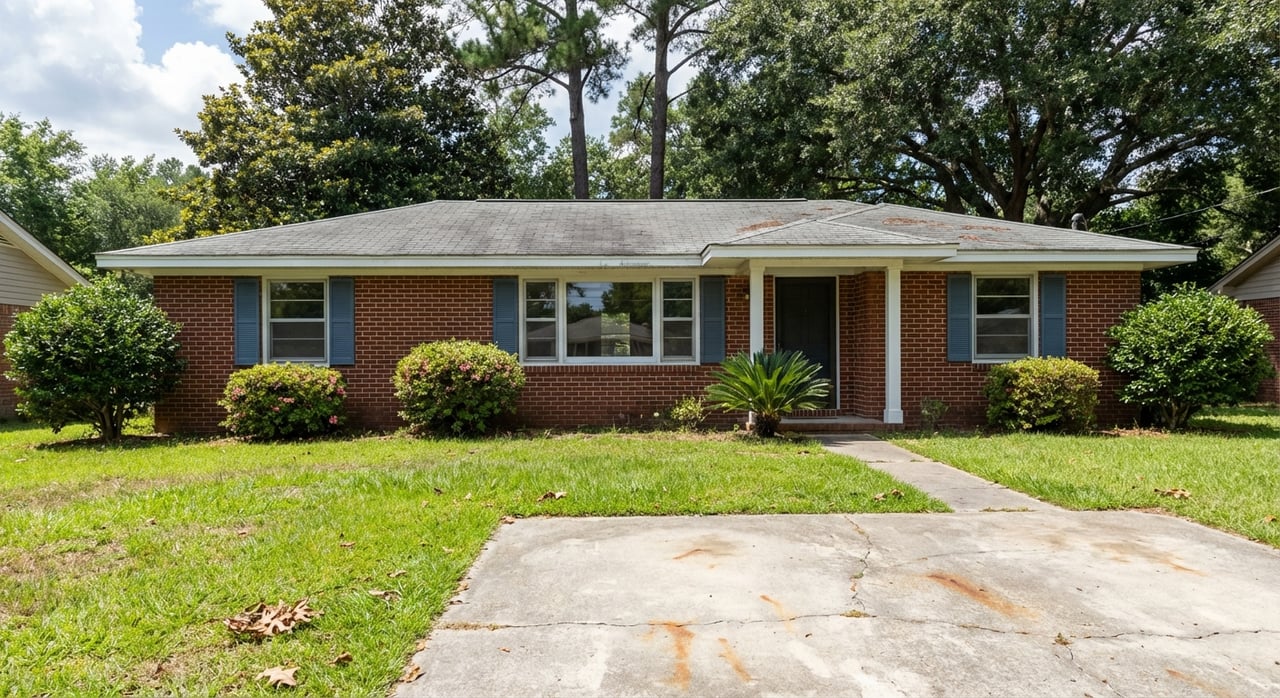
Thinking about selling your Grand Bay home but getting mixed signals from the headlines? You are not alone. In a small market like Grand Bay, a few sales can swing the numbers and make the picture look confusing. In this guide, you will see what the latest data really says, how to read it for your price point, and a simple plan to decide whether to list now or wait. Let’s dive in.
Grand Bay market right now: the real picture
Recent public data suggests a close-to-balanced market with signs that can tilt toward buyers in some months. The story changes by price band and neighborhood, so focus on local comparables and trends over several months.
- Zillow’s typical home value (ZHVI) for Grand Bay was about $208,422 as of Dec 31, 2025. ZHVI is a smoothed index, not the same as a median sale price. You can review the series in Zillow’s Grand Bay page for context. See Zillow’s Grand Bay values.
- Redfin’s January 2026 snapshot showed a median sale price of $221,000, about $145 per sq. ft., and roughly 53.5 days on market. Redfin also notes the small sample size, which means month-to-month swings are common. Check Redfin’s Grand Bay market page.
- Realtor.com’s December 2025 ZIP 36541 snapshot pointed to a median list price near $279,900, a median days on market around 91 days, and about 117 active listings for the broader area. See Realtor.com’s 36541 snapshot.
- Mortgage costs matter for buyer demand. The 30-year fixed rate averaged about 6.09% in mid-February 2026, and even small moves can change affordability. Track rates on Freddie Mac PMMS.
Why do the numbers differ? Each source defines “Grand Bay” differently. Some pull data from the smaller Census-designated place, while others use the larger 36541 ZIP. Different boundaries and methods lead to different figures. That is why you should compare similar homes near you over a few months rather than relying on a single headline.
County context helps
Mobile-area trends influence demand in Grand Bay because many buyers commute or consider both areas. Industry summaries in 2025 showed median prices in the mid-$200Ks and days on market rising from the pandemic peak, which points to a more balanced environment. Review ACRE’s Mobile-area update.
What this means if you sell this spring
- Expect a balanced-to-slightly buyer-leaning market in some months. Good preparation and a realistic price still bring steady interest.
- Local figures suggest sellers were receiving offers near list price on average in late 2025. Realtor.com’s snapshot cited a sales-to-list ratio around 98% for the area. This is not the over-list bidding era, but it supports fair outcomes when your home matches buyer demand. See the 36541 snapshot for context.
- With mortgage rates near 6 percent, buyer pools can expand quickly if rates dip. If you are flexible on timing, watching weekly rate trends can help you choose a window when more buyers are active.
Bottom line: if your home is well-prepared and priced to the market, you can sell within a reasonable timeframe. The key is to price off recent, nearby comparables and reduce buyer objections before you list.
Key indicators to watch before you list
Use these signals to judge timing and strategy for your specific home.
1) Inventory and months of supply
- Meaning: Lower months of supply favor sellers. Around 4 to 6 months is usually considered balanced.
- How to check: Review active listings versus recent monthly sales in 36541 or your immediate area. Your agent can calculate months of supply using MLS data. Public research often uses 4 to 6 months as a balanced range. Learn more about months-of-supply norms.
2) Days on market (DOM)
- Meaning: Speed of demand. Redfin’s recent DOM was about 53.5 days for January 2026, while Realtor.com showed higher medians in December 2025 at the ZIP level. A range is normal in small markets. See Redfin’s DOM detail.
3) Price and price-per-square-foot trends
- Watch 6 to 12 months of sales and focus on nearby, similar homes. One unusual sale can skew a small market, so look for multi-month direction rather than a single data point. Check Redfin’s trend charts.
4) List-to-sale price ratio and price reductions
- A ratio near 100 percent signals stronger pricing power. Falling ratios and more reductions suggest you may need to price sharply. Review local listing histories and recent sales. Use Realtor.com’s local snapshot for recent ratios.
5) New listings vs. pendings
- If weekly new listings outpace pending sales, supply is building and buyers gain leverage. Your agent can set simple MLS alerts so you can track this flow over a few weeks.
6) Mortgage rate direction
- Even small rate drops can bring more buyers into your price band. Watch the weekly Freddie Mac PMMS average and discuss how a rate move could shift your list timing. Follow PMMS updates.
7) Local supply changes
- New construction or shifts in investor activity can add choices for buyers. County updates from ACRE and the local association help you see the bigger picture. Review a recent Mobile-area snapshot.
8) Local considerations: insurance, flood, planning
- Insurance costs and flood zones can affect demand and timing. Check current flood data before you list. Start with FEMA’s guidance.
A simple plan to decide if now is right
Follow this four-step process to reach a clear, confident decision.
Step 1: Run your net proceeds
Ask a local agent for a current CMA with 3 to 6 nearby comparables. Build a simple net sheet that includes agent commission, title and transfer costs, and prorations. Closing costs vary by state and deal, so get local estimates before you choose a list price. See a general closing-cost overview.
Step 2: Check timing vs. life needs
If you need to move soon for work, family, or cash flow, listing now can still be smart with the right price and prep. If you have flexibility and your home needs high-ROI fixes, consider a short delay to complete the work before hitting the market.
Step 3: Prepare your home for the market
Focus on the basics that move the needle: declutter, improve curb appeal, touch up paint in neutral tones, fix obvious mechanical issues, and invest in professional photos. A pre-list inspection can reduce surprises later. Staging and solid marketing often help homes sell faster and present better online. See practical marketing and staging tips.
Step 4: Choose your listing window
National studies often show mid-April through May as a high-visibility period, but your local inventory and DOM matter more in Grand Bay. If your house is market-ready and your indicators look favorable, listing sooner may capture motivated buyers. If your signals are soft and you have time, aim for the seasonal bump while staying nimble if rates change. See Realtor.com’s market research context.
When to call a local agent
Reach out as soon as you are considering a sale. If you plan a spring listing, contact an agent about 6 to 8 weeks before your target date to schedule repairs, staging, and photography. If you need to sell quickly, an agent can discuss pricing strategy, timing, and buyer incentives to help you move fast.
What to ask your agent
- Nearby recent sales that match your home’s size, features, and lot context.
- Typical days on market and list-to-sale ratios for homes like yours.
- Recommended pre-list repairs, staging, and estimated ROI.
- A clear marketing plan: professional photos, online distribution, open-house approach, and likely buyer profiles.
- A net-proceeds worksheet at two or three price points and a recommended list range.
Offer strategy in a balanced market
Set a credible list price aligned with your CMA and early buyer feedback. Plan an early performance review at 7 to 14 days to decide whether to adjust pricing or incentives. If you are motivated, consider flexible closing timelines or targeted credits to close the gap for buyers facing rate or repair concerns.
Bottom line for Grand Bay sellers
Grand Bay is a small market, which means careful pricing and prep go a long way. The latest data points to a near-balanced environment with normal variation by price point. If you price to the market, remove objections early, and watch the indicators listed here, you can sell with confidence in the months ahead.
Ready for a no-pressure walkthrough and a data-backed CMA for your Grand Bay home? Connect with Jordan Doole for local guidance backed by Coldwell Banker marketing reach. Get your free home valuation and a clear plan to list with confidence.
FAQs
Is spring 2026 the best time to sell in Grand Bay?
- Spring often brings more buyers, but your choice should depend on local inventory, recent DOM near your price point, and current mortgage rates rather than the calendar alone.
What price range are Grand Bay homes selling in right now?
- Public snapshots showed a typical value near $208K (Zillow) and a recent median sale near $221K (Redfin), but results vary by location and condition. Use a CMA for your exact range.
How long will my Grand Bay home take to sell?
- Recent public data showed DOM anywhere from roughly 50 to 90 days depending on the source and area. Your home’s prep, price, and features will drive your actual timeline.
Should I do repairs before listing in Grand Bay?
- Yes, focus on high-ROI items: curb appeal, neutral paint, fixing visible issues, and professional photos. This reduces buyer objections and can shorten time on market.
How do mortgage rates affect my selling decision in Grand Bay?
- Rate drops can quickly increase buyer demand and affordability. If you are flexible, watch weekly PMMS updates and coordinate timing with your agent to catch stronger buyer activity.
