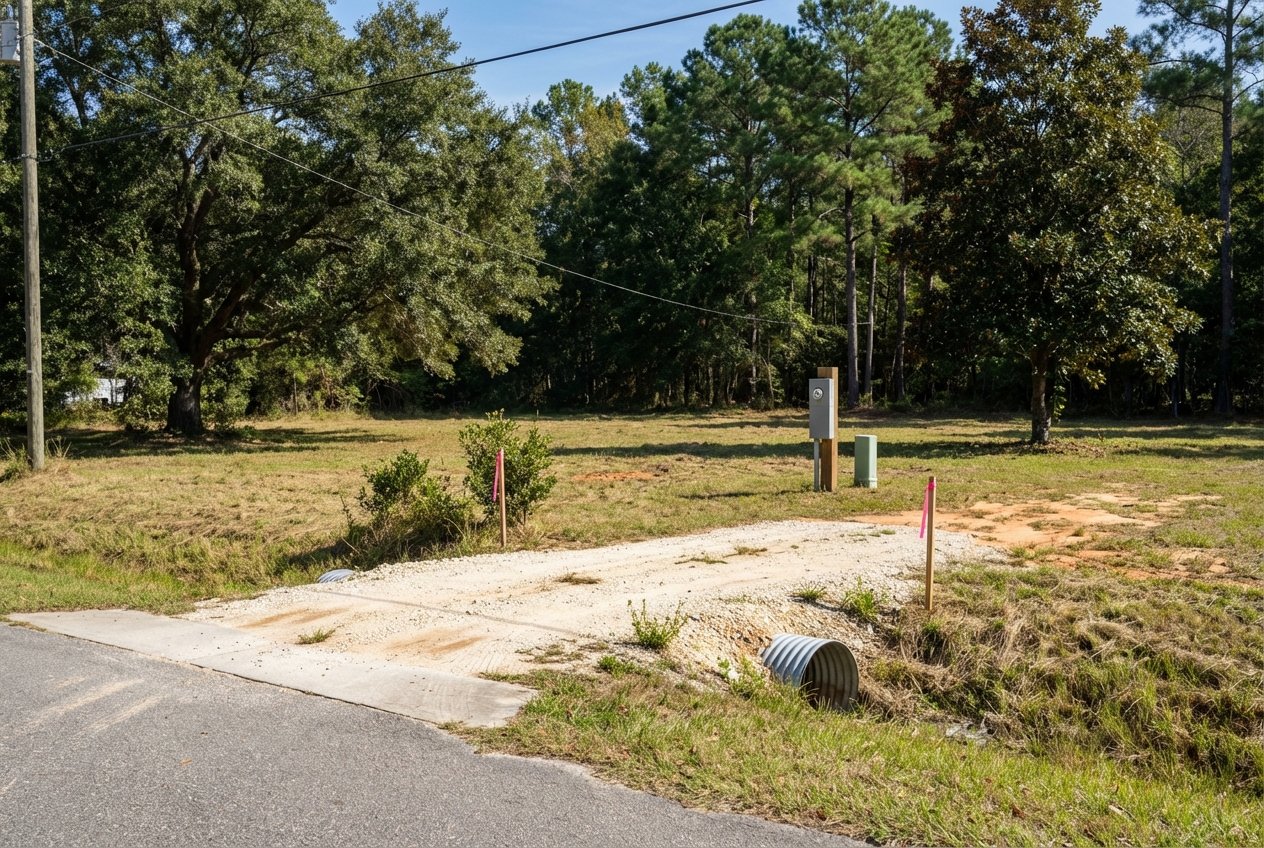
Thinking about buying a residential lot in Semmes to build your next home? The right piece of land can keep your budget on track, while the wrong one can stall permits, add surprise costs, or limit what you can build. You want a clear path from offer to closing to construction. In this guide, you’ll learn the key checks for utilities, septic, access, permits, flood and wetlands so you can move forward with confidence. Let’s dive in.
Jurisdiction basics: Semmes or County
Before you fall in love with a lot, confirm where it sits. Semmes is an incorporated city with its own zoning, subdivision rules, and building-permit process. The city’s planning jurisdiction also extends about a half mile outside city limits. Start by confirming whether a parcel is inside city limits, in the city’s planning area, or in unincorporated Mobile County. You can contact Semmes Planning or use county mapping to check boundaries and parcel data on the City of Semmes Planning page and Mobile County GIS.
If the lot is outside all municipal limits, Mobile County rules apply. The county does not apply city-style zoning to unincorporated areas, but it does apply subdivision and road standards to development. When in doubt, call the city or county to verify your path to permits.
Utilities first: water, sewer, power, internet
Service availability varies street by street in and around Semmes. The City does not operate its own water or sewer utility. Water and sewer are provided by regional systems, such as Mobile Area Water & Sewer System (MAWSS) and South Alabama Utilities. Always confirm which utility serves the road, whether mains are at the frontage, and if there is capacity for a new connection. Start with your provider and request a service-availability letter or estimate. You can contact regional systems like South Alabama Utilities, and the City’s Public Works page offers general guidance.
If public sewer is not available, you will likely need a private onsite sewage system. That triggers a separate health department process and can affect your timeline and budget. For any digging or site work after closing, call Alabama 811 to locate buried utilities first.
Septic feasibility: test before you commit
Where there is no public sewer, the Alabama Department of Public Health (ADPH) requires a site evaluation and a permit before you install or repair an onsite sewage system. Soils, groundwater, and lot size all matter. Poorly draining soils or a high water table can require an engineered system, which is more complex and costly. Review the ADPH process and forms on the ADPH onsite sewage page.
Order a soil evaluation or percolation test early in due diligence. If a prior approval exists, verify it with the local county health office and confirm it covers your intended home size and bedrooms. Do not remove contingencies until you have a clear path to a Permit to Install or a confirmed engineered design.
Flood zones, wetlands, and soils
Always check FEMA maps to see if a lot is in or near a flood zone. Floodplain sites can require elevated foundations, specific lowest-floor elevations, and flood insurance. Use the FEMA Flood Map Service Center for the official designation.
Wetlands can also affect buildability and timing. Use the USFWS National Wetlands Inventory as a screening tool. If it suggests possible wetlands, consider a site-level delineation and expect that impacts may require permits from state or federal agencies. Learn how to use the mapper with this Wetlands Mapper overview.
For soils and drainage, start with a desktop review using NRCS Web Soil Survey, then rely on a soil professional for septic and bearing checks. The City of Semmes requires engineered drainage and grading plans for subdivisions and some site plans. See the city’s Design Standards and Alabama’s low impact development guidance summarized in the LID Handbook.
Title, access, and easements
Make sure the parcel has legal access and that you can use it the way you intend. Confirm public road frontage or a recorded easement that grants access. Review the title for utility easements, conservation easements, restrictions, and any private road maintenance agreements. County parcel records and the recorded plat help you verify these items. Start your research with the Mobile County GIS, then have your title company provide copies of all recorded documents.
Permits and a simple path to build
Your exact steps depend on location, utilities, and site conditions. Here is a simple path to keep you on track:
- Confirm jurisdiction. Verify if the lot is inside Semmes city limits, within the planning jurisdiction, or in unincorporated Mobile County. Use the Semmes Planning page for guidance.
- Run early screens. Check FEMA flood maps and wetlands, and request utility availability letters or estimates. Start with FEMA MSC and contact utility providers such as South Alabama Utilities.
- Start septic if needed. If no public sewer, begin the ADPH septic process. Learn requirements on the ADPH onsite sewage page.
- Prepare plans. Semmes enforces 2018 I-Codes with local amendments. Many residential submittals require engineer or architect stamped plans and health-department documentation for septic. Review submittal needs on Semmes Permitting & Inspections.
- Subdividing lots. Semmes has separate minor and major subdivision processes with engineered drainage, road, utility, erosion-control, and plat documents. See the city’s Subdivision Regulations.
- Driveway and road access. If your driveway connects to a state highway, you may need an ALDOT access permit. For a county road, expect a county ROW or driveway permit. Review access basics via FHWA driveway access guidance.
- Inspections and final sign-off. Follow the inspection schedule for structural, mechanical, electrical, plumbing, site, driveway, and septic approvals. Permits and approved plans must be on site for inspections. Check requirements with Semmes Permitting & Inspections.
Timelines vary by workload and project complexity, so call the city or county offices for current review times before you set your construction schedule.
Budget drivers to verify
A few items can shift your total project cost. Confirm these early:
- Utility extensions. Ask providers for written estimates for meters, taps, and any line extensions. If capacity upgrades are needed, plan for time and cost.
- Septic system type. Standard systems cost less than engineered systems that address poor soils or high water tables. Get professional input before closing.
- Floodplain and fill. Building in or near a flood zone can add survey work, elevation certificates, and foundation or fill requirements.
- Wetlands or drainage design. Jurisdictional impacts or engineered drainage plans can add design fees, reviews, and construction cost.
- Stamped plans and inspections. If your project requires engineer-stamped plans, build that into your soft costs and schedule.
Who to call and when
- Surveyor. Call early if boundary lines or access are unclear, or if you need a stake-out before closing. Start with guidance from Semmes Planning.
- Soil classifier or engineer. If no public sewer, hire a qualified professional to evaluate soils and design septic if needed. See ADPH onsite sewage requirements.
- Civil or site engineer. For lots with drainage challenges or any subdivision plans in Semmes, you will likely need engineered drainage and grading plans. Review the city’s Design Standards.
- Wetlands consultant. If the NWI suggests wetlands or your site is low and wet, consider a delineation before closing. Learn the mapper basics here.
- Licensed builder. Early conversations help you confirm site prep strategies and realistic foundation options. Check permit requirements on Semmes Permitting & Inspections.
Quick buyer checklist
- Confirm parcel jurisdiction with Semmes Planning or Mobile County mapping. Use the Semmes Planning page.
- Ask the seller for any surveys, prior septic or percolation records, and utility letters. Review septic rules on the ADPH onsite sewage page.
- Order a boundary survey or stake-out if lines are unclear. See guidance from Semmes Planning.
- Check FEMA flood zones and screen for wetlands using FEMA MSC and the Wetlands Mapper overview.
- If no sewer, hire a soil professional for a septic evaluation and apply for a Permit to Install as needed with ADPH.
- Confirm water, sewer, and electric service availability. Request letters and cost estimates. Start with providers such as South Alabama Utilities.
- If access is on a state route, confirm driveway permit needs. Review FHWA driveway access guidance.
- Review title for recorded access, easements, restrictions, and private road agreements using Mobile County GIS.
- Keep contract contingencies in place until you verify septic feasibility, flood and wetlands, and utility hookup costs.
Local contacts and tools
- City of Semmes — Permitting & Inspections and Planning
- Mobile County — GIS parcel and mapping
- Alabama Department of Public Health — Onsite sewage systems
- FEMA — Flood Map Service Center
- Regional utilities — South Alabama Utilities
- Call before you dig — Alabama 811
Ready to find the right Semmes lot and move forward with confidence? Our team pairs local insight with practical, step-by-step support from search to closing. Connect with Jordan Doole to talk through your goals and start your land search today.
FAQs
What utilities typically serve residential lots in Semmes, AL?
- Water and sewer service are provided by regional utilities, such as South Alabama Utilities and MAWSS. Confirm the correct provider for your road and request availability letters. Start with South Alabama Utilities.
How do I know if a Semmes lot can support a septic system?
- If there is no public sewer, the Alabama Department of Public Health requires a soil or site evaluation and a Permit to Install. Learn the process on the ADPH onsite sewage page.
How can I check if the property is in a FEMA flood zone?
- Use the official FEMA Flood Map Service Center to look up your parcel. If the lot is in a flood zone, plan for elevation and insurance requirements.
What permits are required to build a home in Semmes city limits?
- Semmes enforces 2018 I-Codes with local amendments and often requires stamped plans and septic documentation. Review submittal needs on Semmes Permitting & Inspections.
Do I need a driveway permit for access to a state or county road?
- Driveways connecting to state highways may require an ALDOT access permit; county roads typically require a county ROW or driveway permit. See FHWA driveway access guidance.
Who should I contact to confirm parcel lines and recorded access?
- Start with a boundary survey or stake-out by a licensed surveyor and review parcel data on the Mobile County GIS. Your title company can pull easements and access documents.
