Thinking about a fixer-upper in Eight Mile but not sure how to separate a great deal from a money pit? You’re not alone. With approachable price points and a mix of property types, Eight Mile can work well for first-time investors and value-focused buyers. In this guide, you’ll learn how to size up repairs, run quick deal math, spot local risks, and plan financing so you can move with confidence. Let’s dive in.
Eight Mile market basics
When locals say “Eight Mile,” they usually mean the area covered by ZIP code 36613 in northern Mobile County. It is a suburban and semi-rural pocket with a modest population spread over a large area. Prices vary by data source and timing, so think in ranges rather than one number.
- Realtor.com reported a recent median listing price near $134,499 (Oct 2025).
- Redfin showed a median sale price around $170,000 (Jan 2026).
- Zillow snapshots placed area medians roughly in the $150,000 to $160,000 band.
These differences reflect listing versus closed-sale measures, shifting boundaries, and timeframes. For your after-repair value, rely on MLS sold comps from the last 6 to 12 months in the same subdivision or immediate area.
What you will find on the ground
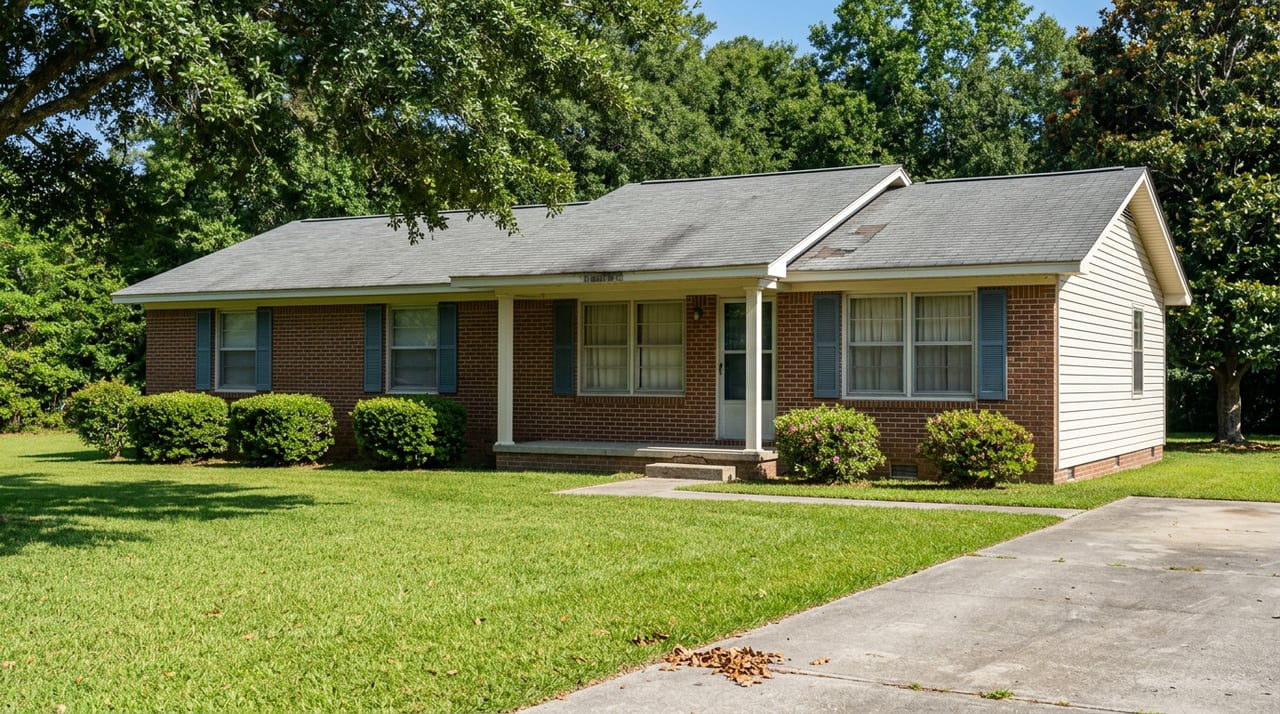
You will see a mix of older single-story houses, modest brick ranches, scattered manufactured homes on land, and occasional acreage parcels. That mix often creates entry-level opportunities for small flips or rentals. Some areas sit near parks and open space, which can add trail and recreation access but also call for care around wetlands and stream setbacks. Always check parcel maps before you budget site work.
Run the numbers fast
70 percent rule example for Eight Mile
A common first screen for flips is the 70 percent rule: Maximum offer equals after-repair value times 0.70 minus repairs. Learn more about this rule at the BiggerPockets overview of the 70 percent rule.
- If ARV is $170,000, 70 percent equals $119,000.
- If you estimate $30,000 in repairs, your max offer is about $89,000.
This rule of thumb builds in room for closing, holding, and selling costs, plus a cushion. Still, confirm ARV with 3 to 5 recent closed comps, and add a contingency line in your budget.
Buy-and-hold quick math
Start with market rent and keep expenses realistic.
- Example: $1,200 per month rent equals $14,400 per year.
- If you assume 40 percent for taxes, insurance, maintenance, management, and vacancy, your NOI is about $8,640.
- If your all-in cost is $100,000, that is an 8.6 percent cap rate (NOI divided by price).
For loans, calculate cash-on-cash after debt service. Use actual tax and insurance quotes for accuracy.
Repair cost cheat sheet
Use these ranges as a screening tool only. Get a full inspection and 2 to 3 local contractor bids before you finalize numbers.
| Repair category | What to check | Conservative ballpark | Learn more |
|---|---|---|---|
| Foundation/structure | Cracks, settling, sticking doors | Minor $250 to $15,000; major underpinning $10,000 to $25,000+ | Foundation cost guide |
| Roof | Age, leaks, shingles, decking | Typical replacement $5,900 to $13,200, average near $9,500 | Roof replacement costs |
| HVAC | Age, efficiency, refrigerant, ducting | Full system replacement often several thousand dollars | HVAC repair/replacement costs |
| Plumbing/sewer | Main line, leaks, water heater, septic | Small fixes hundreds; sewer or septic work $1,000 to $10,000+ | Sewer line repair costs |
| Electrical | Panel size, grounding, rewiring needs | Upgrades and rewiring can be several thousand dollars | Contractor quotes recommended |
| Termites/mold | Signs of pests, moisture, rot | Inspection plus treatment varies by scope | Formosan termite overview |
| Lead/asbestos (pre-1978) | Painted surfaces, old materials | Certified work may add cost and time | EPA RRP rules |
| Cosmetic refresh | Paint, flooring, fixtures | Light updates often $5,000 to $25,000 | National average ranges; confirm locally |
Note: Coastal Alabama humidity raises the risk of termites and moisture issues. A current termite letter and treatment history can materially change your rehab plan and price.
Due diligence before you offer
- Verify taxes, liens, and parcel details with the Mobile County Revenue Commissioner’s search. Use it to confirm legal description and look for red flags in history. Start at the Mobile County property search.
- Check flood risk through FEMA’s Flood Map Service. Flood zone status can affect insurance, financing, and your rehab plan. Review your address on the FEMA flood map portal.
- Order a full home inspection plus specialty inspections where needed: roof, HVAC, pest/termite, sewer or septic evaluation, and a structural engineer if you see movement or cracks.
- Confirm utilities early. Know if the property is on public water and sewer or well and septic. For septic, ask for permit records and any soil tests.
- Follow EPA rules on pre-1978 homes. Lead-safe practices can affect scope, timing, and contractor requirements.
- Get written contractor estimates with a line-item scope of work. This helps you and your lender underwrite the project more accurately.
Red flags to slow down
- Severe foundation movement with no clear, affordable fix.
- High-risk flood zone with repeated claims or likely elevation requirements.
- Extensive termite damage or widespread wood rot that compromises structural members.
- An uninsurable roof or major system failures that push total cost over local ARV.
Financing options for rehabs
- FHA 203(k) renovation loans let owner-occupants wrap purchase and rehab into one mortgage. Review eligibility and process on HUD’s page for FHA 203(k).
- Private fix-and-flip or short-term rehab loans exist, but rates and fees are higher. Include these carrying costs in your budget.
How a local agent helps in Eight Mile
A local investor-friendly agent can make or break a fixer-upper deal. Here is how the right partner adds value:
- Pulls tight, recent MLS sold comps from the same block or subdivision so your ARV is real.
- Sources off-market or stale listings where numbers often pencil.
- Coordinates trusted contractors for fast bids and helps you refine the scope of work.
- Runs parcel and permit checks and points you to the correct county offices for records.
- Advises on exit strategy, days on market, and likely buyer pool so you budget sale costs correctly.
Next steps
If you want help screening Eight Mile properties, pricing repairs, and building a confident offer, let’s talk. As part of a locally rooted Coldwell Banker team, we pair neighborhood experience with broad marketing reach to support your goals. Connect with Jordan Doole to discuss your plans or to start a targeted search today.
FAQs
What is a realistic price range for fixer-uppers in Eight Mile?
- Recent snapshots show listing and sale medians from roughly $134,000 to $170,000 depending on source and date, but your deal should be based on MLS sold comps for the same micro-area.
How do I estimate after-repair value in Eight Mile?
- Pull 3 to 5 recent closed sales from the same subdivision or immediate area within the past 6 to 12 months, adjust for size and condition, and use those as your ARV anchor.
What inspections matter most for Eight Mile fixer-uppers?
- Full home inspection plus termite, roof, HVAC, sewer or septic evaluation, and a structural engineer review if you see cracks or settlement are common must-haves here.
How do I check flood risk before I offer?
- Enter the address in FEMA’s Flood Map Service to see zone status and talk with your insurance agent about coverage and cost.
Can I use an FHA 203(k) loan for a fixer-upper in Eight Mile?
- Yes, owner-occupants can explore FHA 203(k) to combine purchase and rehab; review program details on HUD’s 203(k) page and confirm eligibility with your lender.
Are manufactured homes a viable fixer-upper option in Eight Mile?
- They are part of the local mix, but you should confirm foundation type, title status, local permitting, and financing options since requirements can differ from site-built homes.
