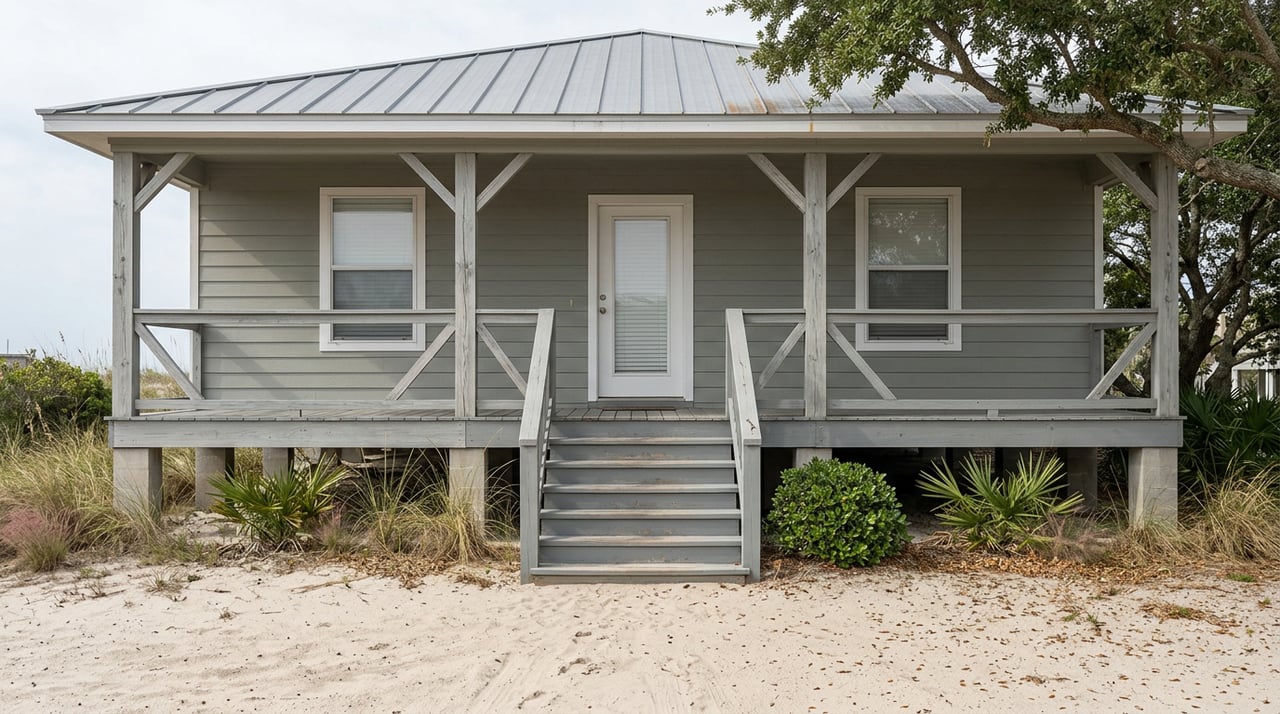
It's a Tuesday in August, and the parking lot outside Islanders on Bienville Boulevard has more local plates than out-of-state ones. That alone is new. For most of the years people have lived here full time, a Tuesday night on Dauphin Island meant one of three things: cook at home, drive the causeway to Mobile, or eat whatever the one open kitchen happened to be serving that week. The island's food scene has always been built around a tourist's schedule, weekend crowds, lunch rushes tied to the ferry, dinner hours that shrink the moment the beach traffic thins out.
That's shifted this summer, and it's shifted in a way that says something about who actually lives here now, not just who visits. The bigger change isn't the food. It's that a research institution most residents drive past every day has quietly opened its doors wider than it ever has, and almost nobody who lives on this island seems to have walked through them.
The island runs on a tourist's clock, not a resident's
Dauphin Island's year-round population sits at 1,993 people as of 2026, up from 1,783 recorded in the 2020 census, a gain of roughly 11.8 percent in six years. That's real growth for a barrier island with one road on and off it, but it's still fewer full-time residents than a single subdivision in unincorporated Mobile County.
A town that small can't support a restaurant economy sized for its own population. It supports one sized for whoever's staying at the beach that weekend. That's why, for years, the reliable dinner options here have leaned toward fried baskets and bar food built for turnover: Pirate's Bar & Grill, Billy Goat Concessions, Foxy's Waffle Bar. Good food, but built for a crowd that's gone by Monday.
What's different in 2026 is that the openings finally include something aimed at the people who are still here on Monday.
Three changes that actually affect a Tuesday night
Bienville Bar & Grill opened this summer, and it matters less because it's new and more because of what it is: one of the only full-service kitchens on the island, not a walk-up window or a seasonal snack stand. Hunny Bunny's, a coffee shop near the corner of Bienville and Lemoyne, opened as the island's newest coffee option, serving beans sourced from Maui out of a small storefront that's easy to miss if you're not looking for it. And Islanders Restaurant & Bar, the closest thing the island has had to a standing institution, rolled out a new menu as of June 2026, according to its own Yelp listing, the first real refresh in years.
None of these are tourist-destination openings. They're the kind of thing that changes whether a resident cooks at home on a random weeknight or has somewhere else to go.
| If you wanted... | Before summer 2026 | Now |
|---|---|---|
| A sit-down dinner that isn't a fry basket | Drive the causeway or wait out Islanders' seasonal rotation | Bienville Bar & Grill, one of the island's few full-service kitchens |
| Real coffee before the ferry line starts | Instant coffee or a gas station stop | Hunny Bunny's, near Bienville and Lemoyne |
| A reason to give Islanders another look | Same menu for years | New menu as of June 2026 |
It's a small list. On an island this size, small is the whole point. Three changes is a real shift in options when the previous number was close to none.
The research institution in your backyard has open doors
Here's the part most residents are actually missing. The Dauphin Island Sea Lab isn't just a school field-trip stop or a research facility with a gift shop attached to it. It runs a public event calendar, and this month it includes a Boardwalk Talk called "Sand, the Beach's Storyteller" on August 19, 2026, followed by a Research Vessel Excursion on September 3, 2026.
These aren't abstractions aimed at visiting university groups. They're scheduled events on an island where the walk from most homes to the Sea Lab campus takes less time than the drive to a mainland restaurant. And the institution behind them has real standing: in June 2026, the Dauphin Island Sea Lab received a 50-Year Cooperative Observer Program Award from the National Weather Service, recognition for a half-century of consistent weather data collection from the same stretch of coast residents live on right now.
That's the kind of local institution most people treat as background scenery, something for scientists and school buses, not something you actually walk into on a Wednesday evening. The programming exists. The uptake from people who live here full time appears to be close to nothing.
The corners still worth the walk
The same pattern shows up in the island's quieter landmarks. The Dauphin Island Audubon Bird Sanctuary, Fort Gaines, and Indian Shell Mound Park all sit close enough to residential streets that most people have driven past the entrance signs more times than they've walked through them. These aren't hidden. They're just easy to file under "things for visitors" when you've had access to them every day for years.
That's the thread running through all of it this summer. The island added a real dinner option, a real coffee shop, a refreshed menu at its longest-standing restaurant, and wider public access to one of the more serious research institutions on the Gulf Coast, and the people most positioned to use all of it are the ones least likely to have tried.
The takeaway for anyone who already calls this island home
None of this changes what Dauphin Island is. It's still a small, quiet barrier island with one road, one ferry, and a population that could fit in a mid-size church. What's changed is that a few of the gaps in daily life here, a decent weeknight dinner, a real cup of coffee, a reason to walk into the Sea Lab instead of just driving past it, have started closing. Worth checking out before the next tourist season resets the clock.
If you're weighing what a home here is actually worth, or just curious how the island's small changes translate into market value, the team at Coldwell Banker Smith Homes knows this stretch of coast block by block. Get Your Free Home Valuation and talk to someone who tracks Dauphin Island as closely as the people who live here do.
